Archives
- 2026-10
- 2026-09
- 2026-08
- 2026-07
- 2026-06
- 2026-05
- 2026-04
- 2026-03
- 2026-02
- 2026-01
- 2025-12
- 2025-11
- 2025-10
- 2025-09
- 2025-03
- 2025-02
- 2025-01
- 2024-12
- 2024-11
- 2024-10
- 2024-09
- 2024-08
- 2024-07
- 2024-06
- 2024-05
- 2024-04
- 2024-03
- 2024-02
- 2024-01
- 2023-12
- 2023-11
- 2023-10
- 2023-09
- 2023-08
- 2023-07
- 2023-06
- 2023-05
- 2023-04
- 2023-03
- 2023-02
- 2023-01
- 2022-12
- 2022-11
- 2022-10
- 2022-09
- 2022-08
- 2022-07
- 2022-06
- 2022-05
- 2022-04
- 2022-03
- 2022-02
- 2022-01
Therefore the histomorphology and the comprehensive
2022-01-11
Therefore, the histomorphology and the comprehensive analysis of TMJ-RA pathogenesis need to be completed although clinical findings in TMJ-RA are similar to RA in other joints [41]. Especially for the dentist, the difficulties associated with diagnosing TMJ-RA patients [49] posing challenges to dia
Similar to in vitro data in
2022-01-11
Similar to in vitro data, in vivo studies have also revealed modulation of TLR4-induced inflammatory responses by AEA. The proposed AEA reuptake inhibitor AM404 has been shown to attenuate TLR4-induced increases in plasma levels of IL-6 and IL-1β, the latter effect mediated by CB1 receptor activatio
Methods br Results br Discussion SV exocytosis from excitato
2022-01-11
Methods Results Discussion SV exocytosis from excitatory boutons is more sensitive to inhibition by isoflurane than exocytosis from inhibitory boutons,4, 31 but the mechanism(s) of this synaptic selectivity is unknown. Although P/Q-type VGCCs contributed quantitatively more to SV exocytosis t
Myelination by oligodendrocytes is required for saltatory
2022-01-11
Myelination by oligodendrocytes is required for saltatory nerve impulse conduction and proper CNS function (Bercury and Macklin, 2015). Defects in myelination and remyelination impair saltatory nerve conduction and functional connectivity leading to cognitive, behavioral, and motor deficits in neuro
br Results br Discussion In this
2022-01-11

Results Discussion In this study, we found that ZNF280A was elevated in CRC tissues and a high expression of ZNF280A correlated with advanced clinicopathological features, poor prognosis, and disease progression in CRC patients. Furthermore, silencing ZNF280A attenuated proliferation and inhib
Biological evaluations of the compounds were done both using
2022-01-11
Biological evaluations of the compounds were done both using HCV protease and replicon assays. Results are shown in . The protease inhibitory IC’s were determined using a FRET assay with HCV NS3/4A 1a protease domain. The replicon EC’s were determined using a replicon luciferase cell-based assay. Th
In summary we propose a model that
2022-01-11
In summary, we propose a model that explains the possible mechanism the HULC mediates activation of HBV in liver cancer cysteine protease inhibitor (Fig. 8). In the model, HULC promotes the expression of miR-539 by stimulating HBx-co-activated STAT3. Then, miR-539 down-regulates APOBEC3B, leading t
Decreased ratio of Treg TH
2022-01-11

Decreased ratio of Treg/TH17 is reported to correlate with MS disease severity [63]. Treg Nimodipine are the major anti-inflammatory subset of T cells which suppress proinflammatory T-cells by producing anti-inflammatory cytokines, such as IL-10 and TGF-β, as well as play a critical role in maintai
br Conclusion br Conflict of interest br References and reco
2022-01-11
Conclusion Conflict of interest References and recommended reading Papers of particular interest, published within the period of review, have been highlighted as: Acknowledgements Introduction Free fatty acids (FFAs) are essential nutrients that contribute to various cellular functio
WWL 70 mg br Conflict of interest statement br Acknowledgeme
2022-01-10
Conflict of interest statement Acknowledgements We acknowledge the support of Zoetis Animal Health, Estrotect, Select Sires and Texas A&M AgriLife Research. The assistance of Randle Franke and Ernest Soto is also gratefully acknowledged. Background Luteal phase deficiency (LPD) is caused b
br Advanced Glycation Endproducts As glucose levels
2022-01-10
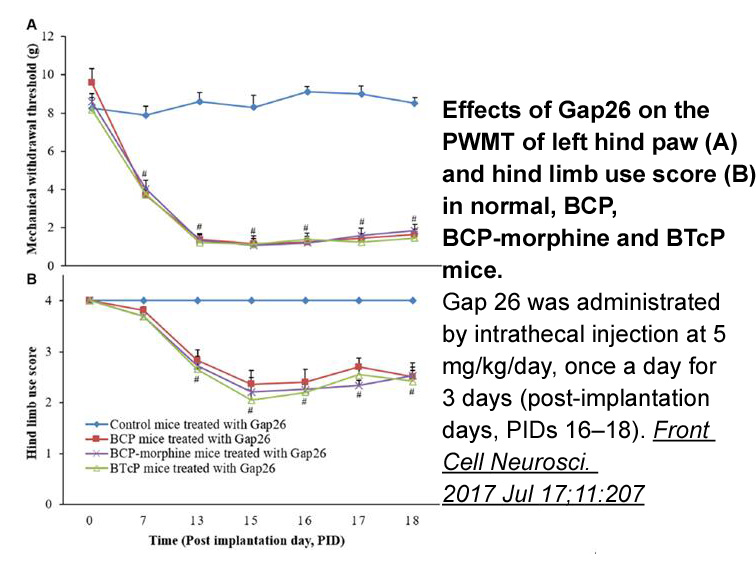
Advanced Glycation Endproducts As glucose levels rise within sensory neurons as a result of hyperglycemia, normal metabolic pathways become overwhelmed and excess glucose is shunted into other ancillary pathways that, under these conditions, become damaging. One consequence of hyperglycemia is th
lgk974 The experiments indicate that a major component of
2022-01-10
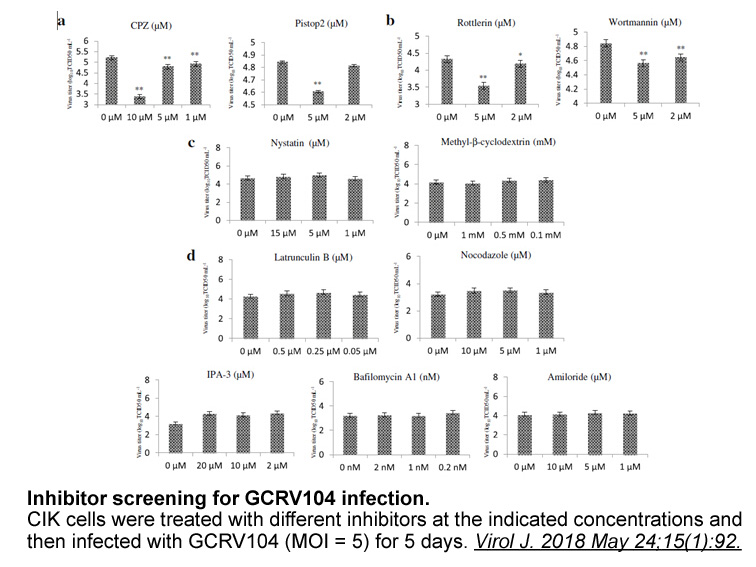
The experiments indicate that a major component of the vasodilatation is due to antagonism of α 1-adrenoceptors. Evidence for α1-adrenoceptor antagonism is that vasodilatation was observed in lgk974 preconstricted with α1-adrenoceptor agonists, phenylephrine or methoxamine, but not in vessels preco
br Learning from our ancestors
2022-01-10
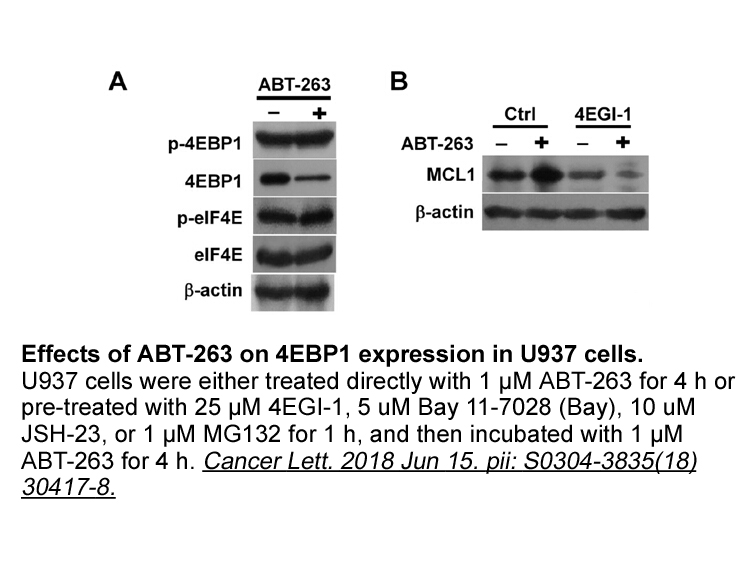
Learning from our ancestors As mentioned earlier, homologues of all γ-secretase components have been identified in plants and protozoans, some of which have emerged as model systems for the study of γ-secretase independent functions of the presenilins [27]. The moss P. patens was the first plant
Focal adhesion kinase Fakir et al
2022-01-10
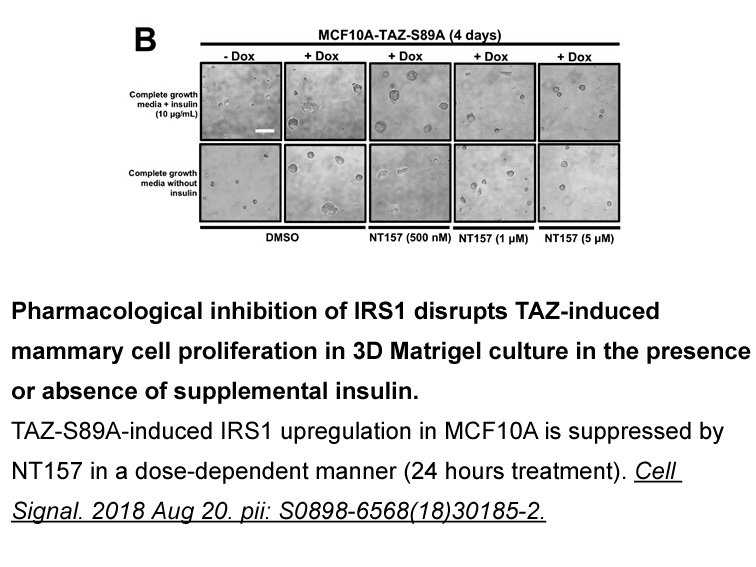
Focal adhesion kinase (Fakir et al., 2006), also known as non-receptor tyrosine kinase (PTK2), is a 125-kDa protein that regulates cell migration, adhesion, proliferation, and survival (Tavora et al., 2014; Yang et al., 2016; Tian et al., 2017). Many studies have observed FAK overexpression and/or
mk2206 sale In cancer cells HIF upregulates HK II expression
2022-01-10
In cancer cells, HIF-1α upregulates HK-II expression by binding to the hypoxia-responsive element in the HK-II promoter region to adapt to hypoxic conditions [20]. In the present study, we observed that mangiferin transiently increased HIF-1α expression in endothelial cells, suggesting another possi
8684 records 574/579 page Previous Next First page 上5页 571572573574575 下5页 Last page